

Autophagy defects connect mitochondrial stress and inflammation
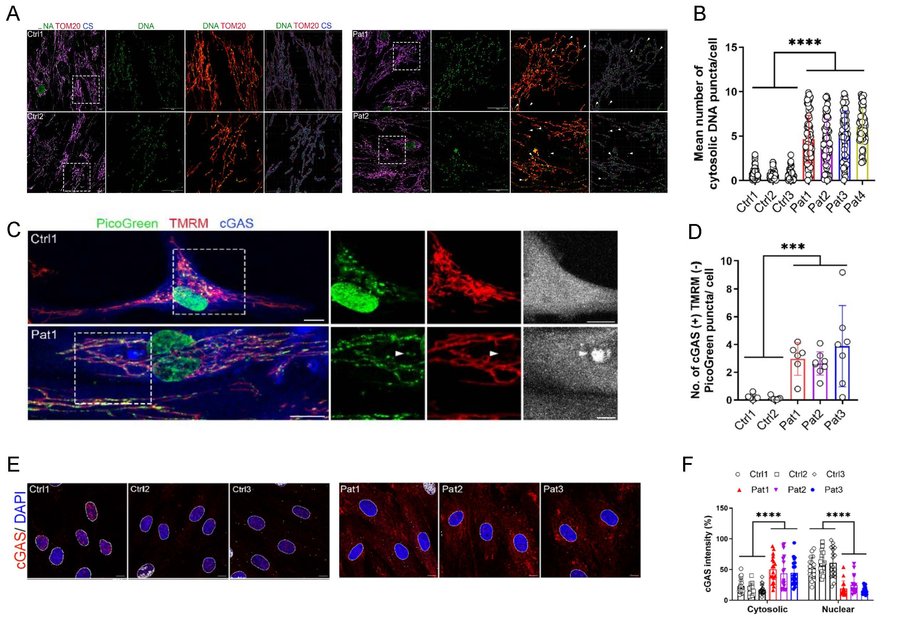
In collaboration with partners at University College London and King’s College London, we investigated how pathogenic EPG5 variants disrupt mitochondrial function. Experiments in patient-derived fibroblasts and induced pluripotent stem cell-derived cortical neurons linked defective mitophagy to mitochondrial calcium overload, mitochondrial DNA release and activation of cGAS–STING signalling. Pharmacological intervention attenuated these abnormalities in the experimental models, identifying targets for further preclinical investigation.
Read more: Source publication